July 2026
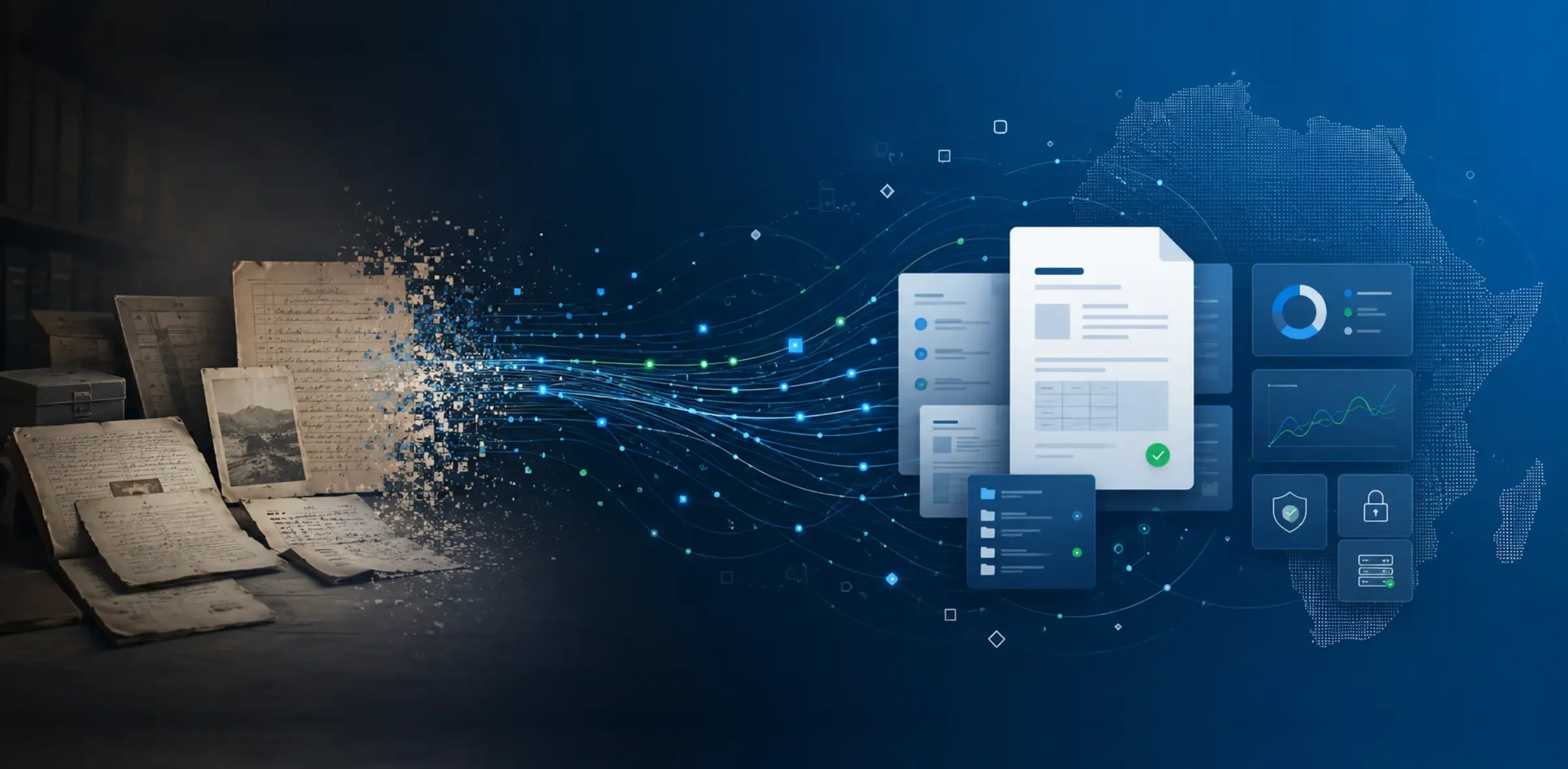
From fragile documents to 500 million pages: Why we built Leap
It started in 2014 with a room of fragile, hand-photographed documents and five servers working overnight. That project taught us the hard part was never scanning a page. It was understanding what the page held. Out of that came Leap, a system that has now processed over 500 million pages. Today we are building something new for South Africa: private, local, and compliant by design. Here is the story, and where we go next.

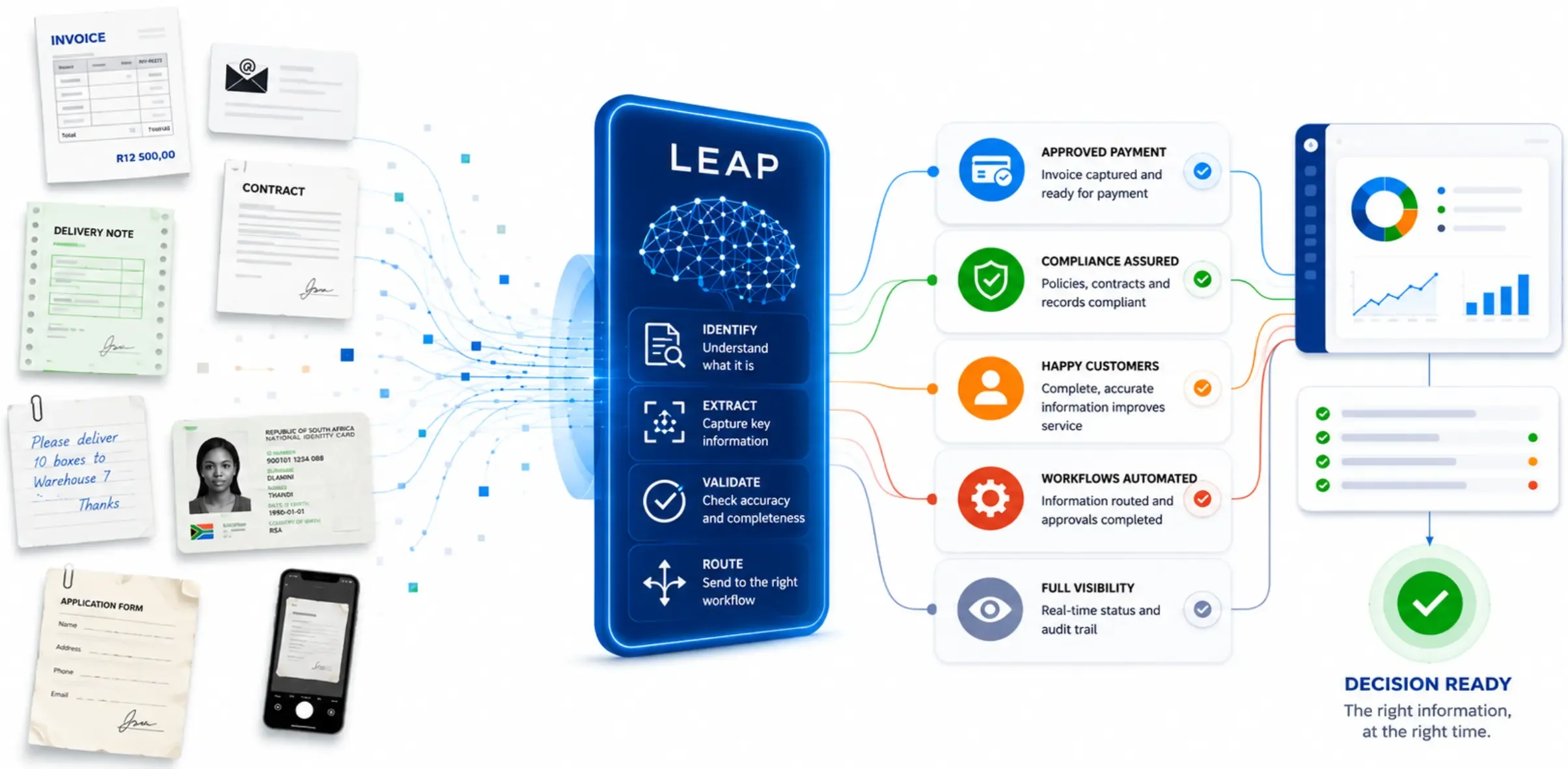
From documents to decisions: The business value behind Leap
Leap’s value lies in turning document-heavy business processes into intelligent, controlled workflows. While organisations already have vast amounts of information, much of it remains trapped inside invoices, contracts, forms and records. Leap unlocks that information, helping businesses improve accuracy, visibility and efficiency. By combining intelligent processing, security and real-world adaptability, it transforms document chaos into faster decisions, stronger compliance and better business outcomes.
The five-stage intelligent workflow handles messy and structured documents alike
Herco provides a detailed walkthrough of the Leap pipeline — multi-channel ingest, smart document identification (even on poor-quality or variable inputs), context-aware extraction, confident validation with human oversight where needed, and seamless delivery into business systems. Explains the “smart choices” mechanism that automatically balances speed, cost and accuracy, and why this architecture outperforms both rigid legacy systems and generic AI-only approaches on real South African document sets.

NVIDIA Nemotron Parse 1.1
NVIDIA released a specialized vision-language model that combines OCR, layout understanding, table extraction, and reading order in one efficient architecture. It significantly outperforms traditional OCR on complex, real-world documents while preserving structure and semantics.

When Computers Were People